
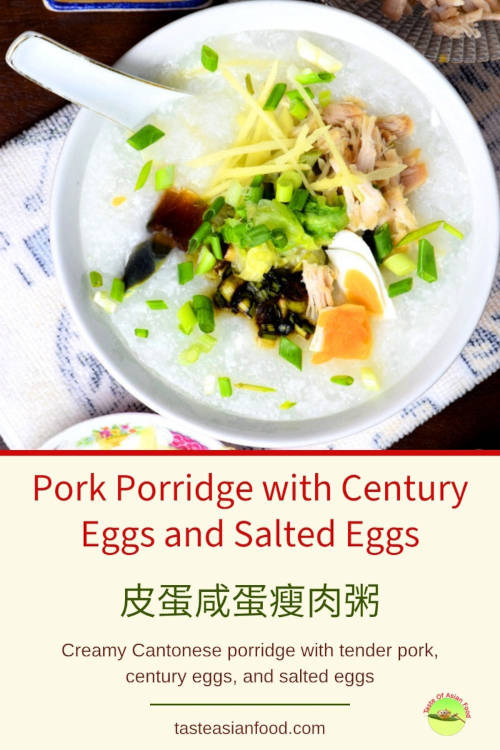
Chinese porridge, also known as congee or jook (粥), is a Cantonese dish I grew up eating. My mother used to make Pork Porridge with Century and Salted Eggs at home, and I also remember going to dim sum restaurants on Sunday mornings to enjoy a bowl.
My mother’s version was particularly delicious. She never wrote down her Chinese porridge recipe, so I had to work out the details myself through testing until I could recreate the flavor I remembered from childhood.
I also kept two of her little touches: spring onions marinated in light soy sauce and finely shredded lettuce. They may sound simple, but they make a noticeable difference to the finished bowl.
This porridge takes time to cook, but the result is worth it. You get a creamy Cantonese-style porridge with tender shredded pork and the distinctive flavors of century eggs and salted duck eggs. Let me show you how I make it.
Content
Note: Click any item to jump straight to that part of the post.
Note: This post may contain affiliate links. Please read my privacy policy for more info. I may receive commissions for purchases made through links in this post. As an Amazon Associate, I earn from qualifying purchases.
Why This Chinese Porridge Recipe Works
- Creamy, smooth texture: Long, gentle cooking allows the rice grains to soften and break into small pieces, giving the porridge its characteristic creamy consistency.
- A flavorful cooking liquid: Homemade chicken broth adds savory flavor, while water keeps the porridge light.
- Tender, well-seasoned pork: Marinating the pork overnight allows the salt to penetrate the meat, helping it retain its flavor after cooking in the liquid.
- Two kinds of eggs: Century egg helps the rice break down during cooking, while salted duck egg adds a distinct savory, salty flavor.
- Flavorful toppings: Soy-marinated spring onions and finely shredded lettuce add extra flavor and a fresh, crisp contrast to the creamy porridge.
Ingredients Breakdown
The porridge base
- Long-grain rice: I use long-grain rice for this recipe. It softens gradually during cooking and breaks into small pieces, giving the porridge its characteristic texture.
- Water and homemade chicken broth: Water provides the main cooking liquid, while chicken broth adds a savory depth to the porridge.
- Century eggs: One is added during cooking to help the rice break down and develop a creamy texture. The other is reserved for serving.
The pork and eggs
- Pork loin: A lean cut that cooks well in the porridge and can be easily shredded into fine strips.
- Salt and vegetable oil: Used to marinate the pork overnight, helping season the meat before cooking.
- Salted duck eggs: These add a distinctive salty, savory taste. Some are mixed into the porridge, while the rest are reserved for the topping.
The toppings and seasonings
- Ginger: Finely julienned ginger adds a fresh, aromatic note to each bowl.
- Spring onions and light soy sauce: Chopped spring onions marinated in light soy sauce add a salty, savory contrast to the mild porridge.
- Lettuce: Finely shredded lettuce provides a fresh, crisp texture.
- Ground white pepper and sesame oil: These are added when serving to give the porridge its finishing seasoning.
Why Cook the Chinese Porridge with Century Egg?
Century eggs are alkaline because of the traditional curing process used to make them. When added to the porridge during cooking, their alkaline properties help soften the rice structure, allowing the grains to break down more easily during the long simmer.
As the rice gradually softens and breaks apart, it releases starch into the cooking liquid. This starch thickens the porridge and gives it a smooth, creamy consistency. The century egg also contributes its own rich texture and flavor to the finished porridge.
That is why I add one century egg during cooking and save the other for the topping. The first helps develop the texture, while the second gives each bowl a more pronounced century egg flavor.
How to Prepare Everything Before Cooking
Prepare the rice
Rinse the rice twice rather than washing it repeatedly until the water runs completely clear. Some of the surface starch helps thicken the porridge. Soaking the rice in water for one to three hours is optional, but I recommend it. The grains absorb water and soften, which helps shorten the cooking time. After soaking, drain off most of the water. There is no need to remove every last drop.
Marinate the pork
Cut the pork loin into large pieces, roughly 2 cm thick and 10 cm long. Mix with salt and vegetable oil, then refrigerate overnight or for at least 12 hours. Before cooking, rinse the salt from the surface of the pork. This advance seasoning is important because pork cooked in water for an extended period can lose much of its flavor and become bland.
Prepare the salted eggs
Wash the salted duck eggs thoroughly to remove the black ash or mud coating. This is particularly important because you will boil the eggs in the same liquid used to cook the porridge. Once cooked, transfer them to cold water to cool. Remove the shells and cut the eggs into small pieces.
Prepare the century eggs
Peel both century eggs. Cut one into small pieces to add to the porridge during cooking. Cut the other into larger, neat pieces for the topping.
Prepare the toppings
Cut the ginger into fine julienne strips. Chop the spring onions into short sections and mix them with light soy sauce.
For the lettuce, cut it into fine strips, mix with salt, and leave it in a colander for about 30 minutes. Drain and squeeze out the excess moisture before serving. This helps reduce the raw taste while keeping the lettuce crisp.
The complete ingredient quantities and measurements are provided in the recipe card below.
Step-by-Step Cooking Instructions
1. Cook the salted eggs and pork
Pour the water and homemade chicken broth into a large pot. Bring the combined liquid to a boil. Add the thoroughly washed salted eggs and boil for about seven minutes, until cooked. Remove the eggs, cool them in cold water, peel, and cut into pieces.
Next, add the marinated pork to the boiling liquid. Cook for about 25–30 minutes, until fully cooked. Remove the pork and set it aside to cool. Keep the cooking liquid in the pot.
2. Add the rice and start simmering
Add the soaked and drained rice to the boiling cooking liquid. Stir continuously, especially during the first five minutes, to prevent the rice from sticking to the bottom of the pot.
Once the rice begins to soften, reduce the heat to a gentle simmer. Add one of the chopped century eggs and continue cooking over low heat.
3. Simmer until creamy
Continue simmering the porridge for approximately 2.5 hours. Keep the heat low and stir frequently throughout cooking. As the porridge thickens, the rice can easily settle at the bottom of the pot and stick, so pay particular attention to stirring the bottom.
The rice grains will gradually break into small, soft pieces. The porridge should become creamy and homogeneous, without a watery layer separating on top. The grains should be very soft but should not disappear completely into a paste.
4. Shred the pork and finish the porridge
Once the pork has cooled enough to handle, use your hands to shred it into fine strips. Return some of the shredded pork to the porridge near the end of cooking and reserve the rest for serving.
Add the salted egg pieces and taste the porridge before adding any extra salt. The salted eggs already contribute quite a bit of saltiness. Add ground white pepper and adjust the seasoning as needed.
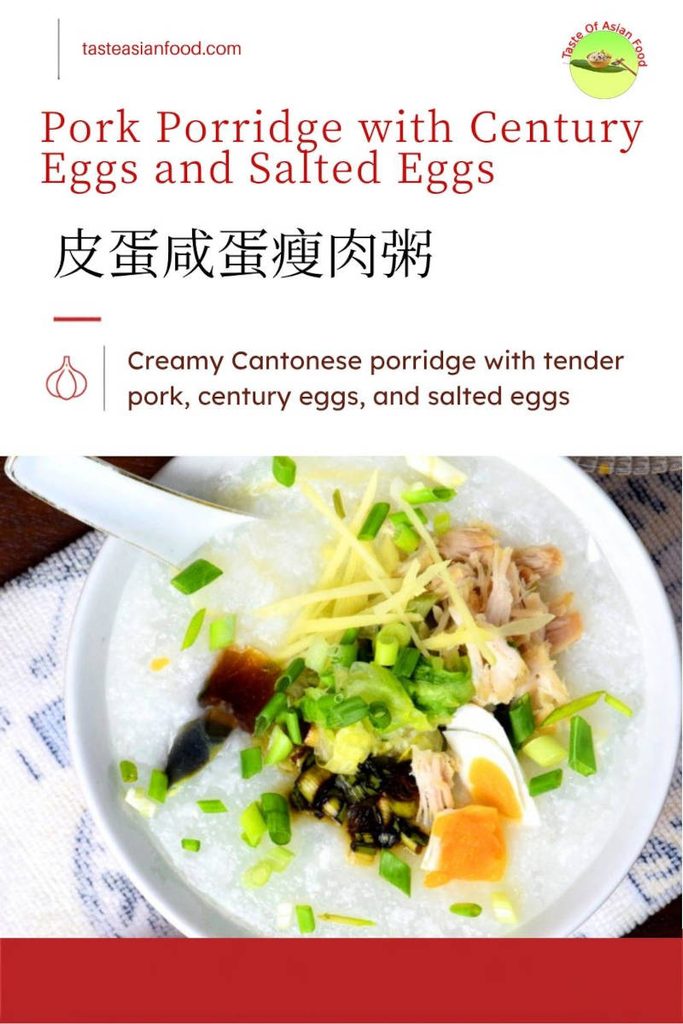
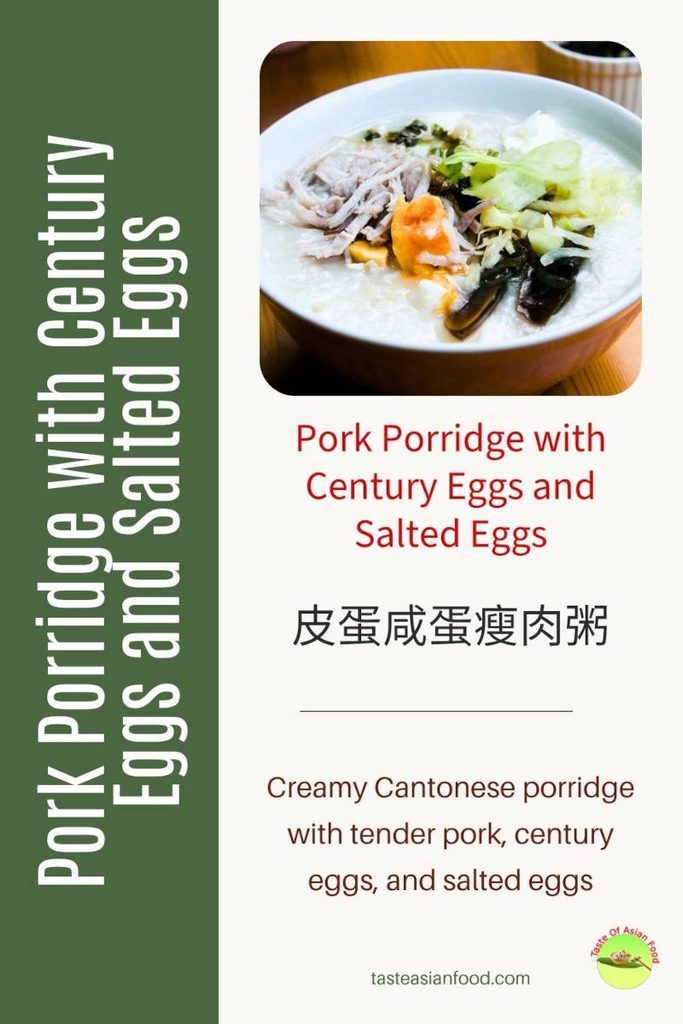
Ladle the hot porridge into bowls. Finish with the reserved shredded pork, century egg, salted egg, ginger, soy-marinated spring onions, and shredded lettuce.
You can also add a little light soy sauce, sesame oil, or extra white pepper at the table.
A Few Tips From My Kitchen
Marinate the pork ahead
I prefer to marinate the pork overnight rather than season it just before cooking. This gives the salt time to penetrate the meat, helping it retain its flavor after cooking in the liquid. Remember to rinse off the surface salt before adding the pork to the pot.
Keep the heat low
This Chinese porridge needs a long, gentle simmer rather than a vigorous boil. Once the rice has softened, keep the heat low and stir frequently. As the porridge thickens, the rice is more likely to settle at the bottom and stick to the pot.
Look for the right texture
I like the rice grains to break into small, soft pieces, but I do not want them to disappear completely. The finished porridge should be creamy, not pasty. Long-grain rice also gives the porridge a slightly different appearance from one made with short-grain rice.
Do not overlook the toppings
The soy-marinated spring onions and shredded lettuce are two ingredients I remember from my mother’s version. The spring onions bring a salty, savory flavor, while the lettuce adds freshness and crunch. They are optional, but I highly recommend trying them.
Common Mistakes to Avoid
Rinsing the rice too much
Washing the rice until the water runs completely clear removes more of its surface starch. Since this starch helps give the porridge body, two rinses are usually sufficient unless the rice is particularly dirty.
Letting the porridge stick to the pot
As the porridge thickens, the rice tends to settle at the bottom. If you leave it unstirred for too long, it can stick and scorch. Keep the heat low and stir frequently, paying particular attention to the bottom of the pot.
Adding too much salt too early
Salted duck eggs already contribute considerable saltiness to the porridge. Taste it after adding the eggs before deciding whether it needs any more salt.
Cooking the rice until it becomes paste
A creamy porridge should still have some soft rice pieces. If you cook it until the grains break down completely, the texture can become too pasty. Keep an eye on the rice as it softens and stop cooking when it reaches your preferred consistency.
The Frozen-Rice Method: A Faster Alternative
If you are short on time, you can use frozen rice instead of cooking with freshly soaked rice. This is the quicker method I explained in my original Chinese porridge recipe.
Rinse the rice, soak it in water, then drain and freeze it overnight. As the water inside the grains freezes and expands, the rice grains crack. When you add the frozen rice to boiling liquid, it breaks down much faster than ordinary soaked rice.
The texture is slightly different, though. The frozen-rice method produces porridge with a texture more like broken rice, while the traditional method gives the grains more time to soften gradually.
Variations for this Chinese Porridge Recipe
Use chicken instead of pork
You can replace the pork with cooked, shredded chicken for a different version of Cantonese congee.
Try another protein
Fish fillets, prawns, or minced beef are other options for this Chinese porridge. Just remember that their cooking times will differ from pork, so adjust the timing accordingly.
Use short-grain rice
Short-grain rice contains more starch and tends to produce a thicker porridge. You may need to adjust the amount of liquid to achieve your preferred consistency.
More Recipes to Try
Bok Choy Soup with Pork
This simple Cantonese soup combines bok choy and pork slices for a quick, comforting home-cooked dish. Like this porridge, it also brings back childhood memories of my mother’s cooking.
Hong Kong-Style Chicken and Corn Soup (雞茸粟米羹)
If you enjoy Cantonese-style soups, try this Hong Kong favorite. It has a smooth texture and familiar flavors that make it a lovely addition to a Chinese home-cooked meal.
Chinese Steamed Eggs
For another easy Chinese home-cooked dish, try these silky steamed eggs. Their delicate texture makes them a good match for a meal with rice and other dishes.
Quick Takeaways
For me, this Cantonese pork and century egg porridge is more than just a comforting bowl of food. It brings back the flavors of my childhood and helps keep a little of my mother’s cooking alive. I hope you enjoy making it as much as I enjoyed recreating it.
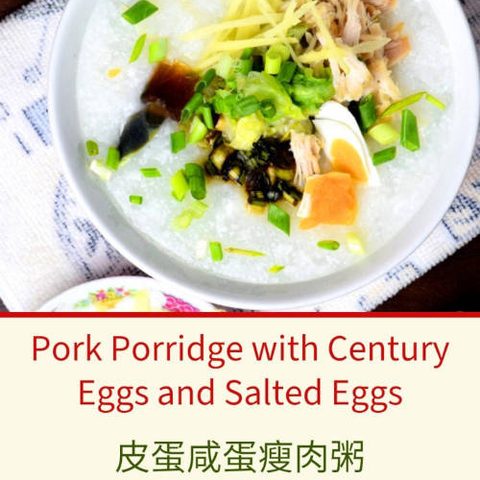
Chinese Pork Porridge (皮蛋咸蛋瘦肉粥) with Century and Salted Eggs
Make this comforting Chinese porridge recipe with tender pork, century eggs and salted duck eggs. A traditional Cantonese congee with a creamy texture.
Ingredients
Porridge:
- 3 liters water
- 1 liter homemade chicken broth
- 250 g long grain rice
- 450 g pork loin
- 2 tsp salt (for marinating the pork)
- 1 tbsp vegetable oil
- 2 century eggs
- 2 salted duck eggs
Toppings and seasonings:
- 35 g ginger
- 2 tbsp chopped spring onions
- 1 tbsp light soy sauce
- 50 g lettuce
- ½ tsp salt (for the lettuce)
- ½ tsp sesame oil
- ½ tsp ground white pepper
Instructions
- Rinse the rice twice. Soak it in water for one to three hours if desired, then drain.
- Cut the pork loin into large pieces. Mix with 2 teaspoons of salt and 1 tablespoon of vegetable oil. Refrigerate overnight or for at least 12 hours. Rinse the surface salt off before cooking.
- Wash the salted duck eggs thoroughly to remove the black ash or mud coating.
- Pour the water and homemade chicken broth into a large pot and bring to a boil. Add the salted eggs and boil for about seven minutes. Remove, cool in cold water, peel and cut into pieces.
- Add the marinated pork to the cooking liquid. Cook for 25 to 30 minutes until fully cooked. Remove and set aside to cool.
- Add the soaked rice to the cooking liquid. Stir continuously, especially during the first five minutes, to prevent sticking.
- Reduce the heat to a gentle simmer. After approximately 25 to 30 minutes, add one chopped century egg.
- Continue simmering over low heat for approximately 2½ hours in total, stirring frequently to prevent the rice from sticking to the bottom of the pot.
- Shred the cooled pork into fine strips. Return some of the shredded pork to the porridge near the end of cooking and reserve the rest for serving.
- Add the salted egg pieces. Taste and adjust the seasoning with ground white pepper and salt as needed.
- Serve with the remaining shredded pork, the other century egg, ginger, soy-marinated spring onions and shredded lettuce. Add a little light soy sauce or sesame oil at the table if desired.
Recommended Products
As an Amazon Associate and member of other affiliate programs, I earn from qualifying purchases.
-
 Arrow Reusable Plastic Storage Container Set, 6 Pack, 1 Quart / 4 Cup Each – Food, Meal Prep, Leftovers – Freeze, Store, Reheat - Clear Container Set With Lids – BPA-Free, Dishwasher / Microwave Safe
-
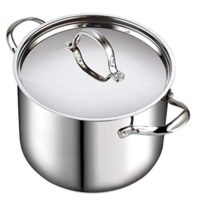 Cooks Standard 02520 Quart Classic Stainless Steel Stockpot with Lid, 12-QT, Silver
-
 Dynasty Jasmine Rice, 20-Pound
Nutrition Information:
Yield: 4 Serving Size: 1Amount Per Serving: Calories: 484Total Fat: 24gSaturated Fat: 6gUnsaturated Fat: 18gCholesterol: 718mgSodium: 2950mgCarbohydrates: 21gFiber: 2gSugar: 1gProtein: 42g
This data was provided and calculated by Nutritionix on 11/6/2026
Hi, this is KP Kwan! If you have any questions about this recipe or tips to make it even better, please feel free to leave a comment here. I’d love to hear from you. Thanks!